Politics AI 2024-10-07 Category1,Category2
Tag1 Tag2
NextGen Marxism: Unpacking the Modern Revolution
Category: Societal Reflections
Word Count: 3,000 | Estimated Reading Time: 15 minutes
Table of Contents
- TLDR
- Introduction
- The Roots of NextGen Marxism
- The Cultural Awakening
- The Metamorphosis of Marxism
- The Takeover: Cultural Institutions
- Organizing for Revolution
- The Role of Social Media in NextGen Marxism
- Critiques and Controversies
- Potential Ideas to Explore
- FAQ
- Further Reading
TLDR NextGen Marxism is a modern adaptation of traditional Marxist ideologies, adapted to focus more on culture and identity rather than solely economic issues. This iteration has found a fertile ground in Western cultural institutions, aiming for systemic change through reeducation, organizing marginalized groups, and reshaping narratives. Despite sharing many goals with classical Marxism, it focuses on exploiting cultural tensions to achieve its revolutionary agenda.
The world has experienced numerous waves of Marxist thought, but few have managed to adapt as effectively as what has recently come to be known as "NextGen Marxism." Unlike the classic image of Marxism that focuses heavily on the economic relationship between the bourgeoisie and the proletariat, this new version broadens its scope to tackle culture, identity, and systemic injustices. But what exactly is NextGen Marxism, and how has it risen to prominence in our current society? This article will explore its origins, key tenets, and its impact on modern Western institutions.
The roots of NextGen Marxism trace back to classic Marxist philosophy, but the key difference lies in the focus on culture and identity as vehicles for systemic change. Karl Marx and Friedrich Engels originally focused on economic structures and material conditions as the basis for revolution, emphasizing the power struggle between capitalists and workers. However, as the Soviet Union crumbled and classical Marxism lost its hold, a shift occurred.
This new wave of Marxism found its footing in Western academia during the 1980s and 1990s, influenced by thinkers like Antonio Gramsci and members of the Frankfurt School. Their ideas suggested that in Western societies, culture—not just economics—was a significant battleground for power. By emphasizing "cultural hegemony," Gramsci laid the groundwork for modern Marxists to view control over cultural institutions as the key to a broader societal transformation.
The cultural awakening of the early 21st century—spurred by movements for racial justice, gender equality, and environmental concerns—provided fertile ground for the growth of NextGen Marxism. The killing of George Floyd in 2020 and the subsequent global protests marked a pivotal moment. The focus shifted to concepts like systemic racism, intersectionality, and equity, providing a narrative framework that aligned well with Marxist ideas of oppression and power dynamics.
NextGen Marxism rebranded itself, shifting from economic oppression to cultural and systemic inequities as the primary focus. Leaders in these movements, some of whom were influenced by Marxist ideology, framed their struggle as not just a quest for social justice but as part of a broader battle against Western liberal democratic structures that they viewed as fundamentally flawed.
Unlike classical Marxism, which focused on mobilizing the working class against economic inequality, NextGen Marxism targets cultural and identity-based grievances. The idea is to use cultural power to destabilize and ultimately dismantle existing structures. This movement utilizes grievances around race, gender, sexuality, and climate to fuel discontent and push for revolutionary changes.
The term "NextGen Marxism" encapsulates how this new form of Marxism adapts to contemporary issues, moving away from industrial workplaces and into universities, social media, and cultural institutions. Instead of factory workers, its agents are activists, educators, and social influencers who propagate these ideals through education, media, and grassroots campaigns.
The Takeover: Cultural Institutions
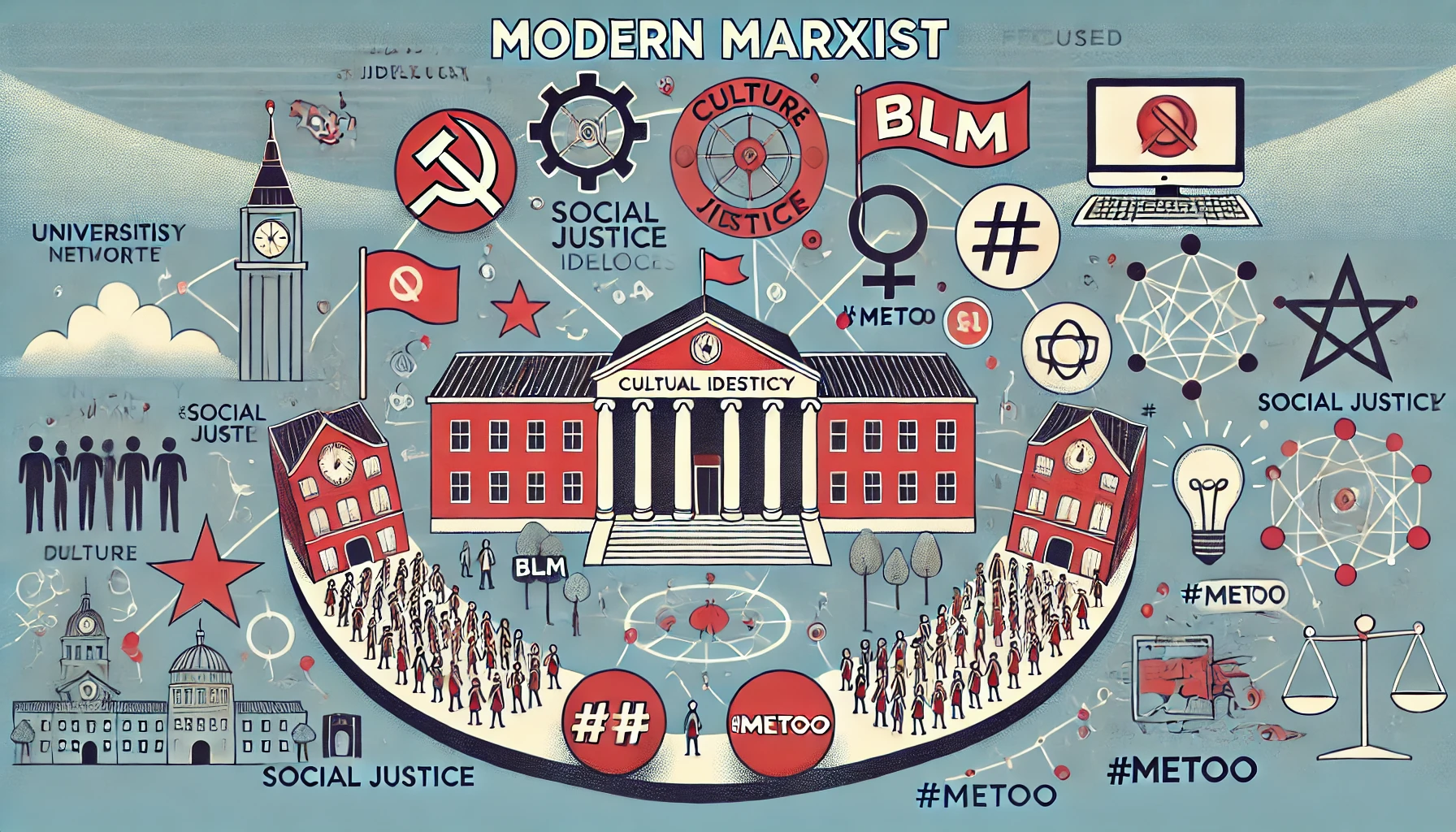
One of the hallmarks of NextGen Marxism is its strategy to take over cultural institutions. From universities to media organizations, NextGen Marxists have succeeded in gaining influence in many key areas of culture. Their goal is not just to criticize the status quo but to actively reshape societal norms and values.
Universities have been at the forefront of this change, becoming hubs for social justice advocacy and indoctrination. Concepts such as Critical Race Theory (CRT) and gender fluidity have become widely accepted in academia and have trickled down into public discourse. The movement's focus on cultural narratives allows it to perpetuate its ideology without the need for formal political power.
In addition to academic institutions, media and corporate environments have also been key targets. Corporate social responsibility initiatives often adopt language and ideas that align with NextGen Marxist values—emphasizing diversity, equity, and inclusion, which, while positive in intent, often serve as vehicles to propagate deeper ideological agendas.
Organizing is a key component of the NextGen Marxist strategy. The movement focuses heavily on grassroots organizing, digital activism, and coalition-building. Groups like Black Lives Matter (BLM) exemplify this approach—using systemic grievances to mobilize support, influence policies, and alter public perception.
Digital platforms play an important role in spreading NextGen Marxist ideals, enabling rapid dissemination of information and the ability to coordinate protests and actions globally. The goal is to foster a sense of collective grievance, uniting various marginalized groups under a single revolutionary banner. Unlike traditional Marxism, which often relied on labor unions, this modern form of Marxism finds strength in social movements and online communities.
The Role of Social Media in NextGen Marxism
Social media has been instrumental in the rise of NextGen Marxism, providing a powerful tool for organizing, propagating, and amplifying the message. Platforms like Twitter, Instagram, and TikTok serve as megaphones for social justice messaging, helping create awareness and mobilize millions within minutes. The viral nature of social media means that messages around systemic oppression, equity, and justice spread far and wide, allowing activists to bypass traditional media gatekeepers.
Moreover, social media enables the crafting of compelling narratives. Hashtags like #BlackLivesMatter, #MeToo, and #ClimateAction serve as rallying points, unifying disparate groups and highlighting shared grievances. This type of digital activism fosters a sense of immediacy, bringing people together in solidarity for causes they may not have otherwise known about. It also amplifies the perceived ubiquity of injustice, making systemic change seem not only necessary but urgent.
Through these platforms, NextGen Marxism has also found a way to apply public pressure to institutions. "Cancel culture," for instance, has become a way to demand accountability and enforce ideological conformity. Public figures, academics, and even corporations are coerced into supporting or rejecting certain ideas, effectively advancing the NextGen Marxist agenda without the need for legislative action.
NextGen Marxism is not without its critics. Some argue that the movement’s emphasis on identity politics and systemic grievances divides rather than unites society. By focusing on group identity and perceived oppression, critics say, NextGen Marxism undermines individual rights and freedoms, creating an environment where dissenting views are marginalized or silenced.
Others contend that the movement’s methods of coercion, such as "cancel culture," are fundamentally undemocratic. The practice of publicly shaming individuals or organizations for holding unpopular opinions runs counter to the values of free speech and open debate. This has led to an atmosphere of fear in which individuals are reluctant to express nuanced or opposing perspectives, hindering genuine dialogue and intellectual diversity.
The movement’s economic implications are also debated. By advocating for significant wealth redistribution and systemic change, NextGen Marxism has been accused of promoting policies that could stifle innovation and economic growth. Critics argue that the focus on cultural and identity-based grievances distracts from practical solutions to economic inequality, making the movement less effective in addressing real material concerns.
Despite these criticisms, supporters of NextGen Marxism argue that the movement is essential for addressing the deep-rooted inequities that persist in society. They believe that challenging existing power structures—whether cultural, economic, or political—is necessary for achieving true justice and equality.
- The role of digital platforms in spreading revolutionary ideologies.
- Comparison between classical Marxism and NextGen Marxism in their methods of societal change.
- The impact of cultural Marxism on modern education systems.
- How corporations have adopted elements of NextGen Marxism through diversity and equity programs.
- The influence of Antonio Gramsci on modern leftist movements.
- The ethics and implications of "cancel culture" in advancing political agendas.
- The effect of social media algorithms in amplifying ideological echo chambers.
-
What is NextGen Marxism?
-
NextGen Marxism is a modern form of Marxist ideology that focuses on cultural and identity-based struggles rather than purely economic ones. It aims to achieve systemic change through control of cultural institutions.
-
How is it different from classical Marxism?
-
Unlike classical Marxism, which focused on class struggle and economic inequities, NextGen Marxism emphasizes cultural hegemony, identity politics, and systemic oppression in areas like race, gender, and environment.
-
Why is cultural hegemony important in NextGen Marxism?
-
Cultural hegemony refers to the control of cultural narratives and norms. For NextGen Marxists, gaining influence over culture is key to reshaping societal values and ultimately achieving systemic change.
-
What role do universities play in spreading NextGen Marxism?
-
Universities serve as primary hubs for spreading NextGen Marxist ideology. Academic programs and campus activism promote ideas like systemic racism, equity, and social justice, aligning with the broader goals of this movement.
-
Is NextGen Marxism a threat to democracy?
-
Opinions differ, but critics argue that NextGen Marxism undermines liberal democracy by promoting rigid ideologies that suppress dissent and prioritize group identity over individual rights.
-
How does social media contribute to the spread of NextGen Marxism?
-
Social media platforms help spread NextGen Marxist ideals rapidly, allowing activists to organize, disseminate messages, and apply public pressure on institutions and individuals to conform to the movement’s values.
- "Cultural Hegemony" by Antonio Gramsci - Explore the foundational ideas that inform modern cultural Marxism.
- "The Marxist Origins of Critical Race Theory" by James Lindsay - An in-depth look at how CRT connects to classical Marxist thought.
- "The Frankfurt School and Its Influence on Modern Society" by Rolf Wiggershaus - A detailed history of the thinkers who helped shape cultural Marxism.
- "Black Lives Matter and the New Marxist Revolution" by Andy Ngo - A critical examination of BLM and its ideological underpinnings.
- "Manufacturing Consent" by Edward S. Herman and Noam Chomsky - While not explicitly Marxist, it provides insight into how media can shape public consciousness, relevant to understanding cultural influence.
- "The Social Dilemma" by Jeff Orlowski - A documentary that delves into the role of social media in shaping opinions and behaviors, highlighting its relevance to modern ideological movements.